
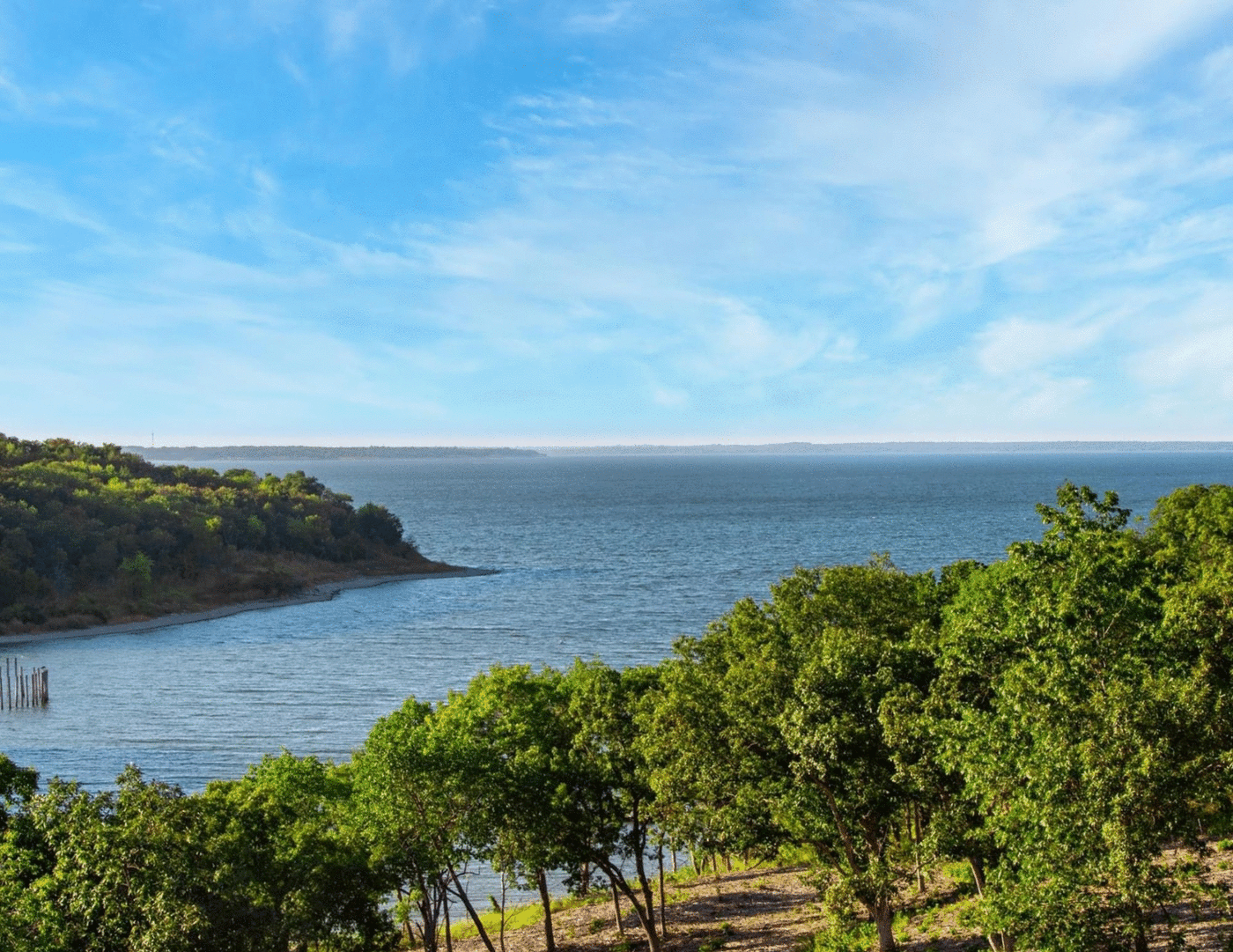
The Striper Capital of the World
The Lake Where Stripers Make Themselves
Here's the thing about Lake Texoma that no lake close to home can touch: the striped bass reproduce here on their own. Introduced back in the 1960s as an experiment, the stripers found the Red River's mineral-rich, slightly salty water so perfect that by 1974 they were spawning naturally — and the state agencies stopped stocking them altogether. Texoma is one of only about seven to ten inland lakes in the entire country where that happens. Everywhere else in Texas, striper fisheries have to be propped up with hatchery trucks year after year. Not here. The fish run up the Red and Washita rivers by the thousands every spring to spawn, and the lake refills itself with hungry, hard-pulling stripers every single year. That's why they call it the Striper Capital of the World, and it's why anglers drive past a dozen bass lakes to get here.
At 89,000 acres with 580 miles of shoreline, Texoma is one of the largest man-made reservoirs in the country — a Red River impoundment straddling the Texas–Oklahoma border, about 75 miles north of Dallas. It's not a quiet little bass pond you pick apart; it's big, open, wind-swept water where schools of stripers herd shad to the surface and the seagulls show you where. If you've never felt a Texoma striper peel drag on a windy main-lake point, you owe yourself the trip.
History + more than Stripers
Built for War, Famous for Fish
Texoma has history in its bones. Denison Dam was built on the Red River from 1938 to 1944 for flood control and hydropower — during World War II, with German prisoners of war among the labor that raised it. It's still one of the biggest lakes the Army Corps of Engineers manages anywhere in the country. But the stripers aren't the only reason people flock here. Texoma is a genuine multi-species giant: it holds the Texas state-record blue catfish — a 121.5-pound monster caught in 2004 — plus trophy smallmouth bass (rare in this part of Texas), largemouth and spotted bass, big crappie, white bass and channel and flathead cats. Two national wildlife refuges, Hagerman and Tishomingo, wrap the lake, so bald eagles and migrating geese share the water with you in winter.
So who's Texoma for? Just about everybody. The striper fanatic chasing a fifteen-pound linesider. The catfish hunter after a personal-best blue. The bass angler who wants a shot at a smallmouth you can't catch anywhere else nearby. The family that wants a real lake vacation with a state park, marinas and a beach. And the tournament crowd — right down to the high schoolers (more on that below). It's a destination lake, not a quick evening trip, and that's exactly the point.
The River that made the Lake
It's the Red River, Dammed
Lake Texoma is really the Red River wearing a lake's clothes. Denison Dam plugged the Red in 1944, and the river — along with the Washita coming in from Oklahoma — is what fills the lake, feeds it, and makes it fish the way it does. That river heritage is the secret behind the stripers: the Red carries salt deposits left from an ancient sea buried under the Texas–Oklahoma line, and that faint saltiness is exactly what saltwater-born striped bass need to thrive and spawn. In spring, the fish run up the Red and the Washita in huge numbers to lay their eggs in the current — rising, flowing river water is what keeps the eggs suspended and hatching. Two rivers to spawn in is a big reason Texoma's striper reproduction runs so high. So when you're fighting a Texoma linesider, you're really fighting a Red River fish.
The Brief
Denison Dam & the Tailrace
At the southeast corner of the lake, Denison Dam is where Texoma meets the Red River again — and where the lake's deepest water sits, up to a hundred feet. When they generate power and release water, the tailrace below the dam comes alive: stripers, white bass and big catfish stack in the current below the spillway to feed on stunned shad, and it's a legendary bank and boat spot when the water's moving. It's also the deep, cool refuge stripers pull to in the heat of summer. A word of caution that matters here more than most places — water below a hydroelectric dam rises fast and hard when generation starts, so watch the horns, the level and the signage, and never wade the tailrace without knowing the release schedule.
We go a lot deeper on the Red River, the spillway and the tailrace fishery on our dedicated Red River page — if that moving-water fishing is your thing, start there.
Lake Texoma Bite Forecast
Live · updated —
Wind Directions Grandpa's Advice
-

Northern Wind- The fish come forth
The cold front just pushed through, Bass may still bite, but they can become less aggressive. Start around timber, protected points, creek-channel edges and cover with a jig, Texas rig, suspending jerkbait or slower-moving soft plastic.
-

Eastern Wind- The fish bite the least
Don't panic, adjust. Instead of abandoning the lake, fish the side where the wind is contacting a point, riprap or shoreline, then slow down if moving baits do not produce and consider throwing out your favorite Urchin from Brannan's.
-

Southern Wind- Fish bite the mouth
Warm southerly winds are common before fronts in Northeast Texas. Try spinnerbaits, bladed jigs, crankbaits, lipless crankbaits and swimbaits along wind-blown points and banks. A breeze can increase surface disturbance and position feeding activity near shoreline cover.
-

Western Wind- The fish bite the best
Fish On! Often times a storm system is on the way and the pressure is dropping.
Your excuse to start aggressive. Look for points, riprap, timber edges and banks getting hit directly by the wind. Bassmaster notes that banks receiving wind more directly can be particularly productive. -

When the Wind is Still- The fish are ill
Flat water often makes fish easier to spook and removes the surface disturbance that can help moving-bait fishing. Try worms, drop shots, Ned rigs, finesse jigs or subtle topwaters early, and target shade, timber, vegetation and deeper structure. Urchins are good back ups here.


What's Biting, Season by Season
-

Summer — Deep, Early, and the Dam
Heat pushes the stripers deep and cool toward Denison Dam and the main-lake structure in 30-plus feet — fish live shad and slabs straight down, and be on the water at daylight. There's a famous daily summer pattern where schools work from the dam around the shoreline and back to the swim beaches by midday, so learn the migration and stay ahead of it. Early topwater over points and humps is a blast when they're schooling up. Blue and channel catfish are outstanding in summer too — this is the lake of the 121.5-lb state record. Beat the heat, fish deep, and follow the shad.
-

Fall — The Topwater Blitz
Fall might be the best striper fishing of the year. As the water cools, the stripers charge shallow and chase shad onto the main-lake points and into the creek arms, and they push them to the surface in feeding frenzies you can see and hear. Watch for the seagulls diving — they'll lead you right to the boils — then throw topwater, swimbaits and slabs into the chaos. It's fast, visual, arm-tiring fishing, and the fall class of fish is fat and healthy. Bass and whites join the shad chase too. Cover water, follow the birds, and enjoy the show.
-

Winter — Flats, Bait & Big Blues
Winter stripers gorge to survive — they move onto the shallow flats and into the creeks to hammer bait, and a slow-worked spoon, swimbait or live shad puts big fish in the boat with the lake nearly to yourself. The resident and wintering gulls are still your best fish-finders. Winter is also prime time for trophy blue catfish on cut shad over main-lake structure and near the dam — some of the biggest blues of the year come now. Bundle up, watch the birds, and don't overlook the cats. Bald eagles overhead are a bonus you won't get in July.
-

Spring — The Striper Run
Spring is when Texoma does its magic: the stripers pour up the Red and Washita rivers by the thousands to spawn in the current. Following that run up the river arms is a Texoma tradition — throw swimbaits, jigs and topwater in the moving water and hang on. Back on the lake, stripers feed hard shallow on the main-lake points and flats. It's also prime for the spring black-bass and white-bass bite, and the smallmouth get active on the rocky banks. If you want the full "Striper Capital" experience, spring is the trip.


The Fish & How to Catch Them
Striped Bass — the reason it's the Striper Capital
Striped Bass — the reason it's the Striper Capital
This is what you came for. Texoma's stripers are self-sustaining, plentiful, and they pull like a freight train — a five-to-ten-pounder is a realistic fish and the lake gives up teens every year. They're open-water schoolers, so find the shad and you've found them: idle the main-lake points, humps, flats and channel edges watching your graph, or watch the gulls for surface-feeding schools. Live gizzard shad is the go-to bait; slabs and spoons dropped vertically, swimbaits, and topwater during the boils all catch them. Summer sends them deep toward the dam; fall and winter bring them shallow chasing bait; spring runs them up the Red and Washita to spawn. They travel in schools by size, so keep moving until you find the class you want. Check current limits and any downstream/river regulations — Texoma has its own rules. If you only chase one fish here, make it the linesider.
Blue Catfish — home of the 121.5-lb Texas record
Blue Catfish — home of the 121.5-lb Texas record
Texoma is trophy blue-cat water, full stop — the current Texas state-record blue, a 121.5-pound giant, came out of this lake in 2004. The rich, shad-filled Red River water grows them huge. Drift or anchor over main-lake structure, humps, channel edges and flats with fresh cut shad, and fish near the dam and the deeper water for the biggest ones, especially in winter when the giant blues feed up. Channel and flathead cats are abundant too — flatheads want live bait around timber and structure. This is genuinely one of the best big-catfish lakes in the country, and a fantastic target when the wind's too rough to chase stripers or when you just want a shot at the fish of a lifetime.
Smallmouth, Largemouth & Spotted Bass — including a Northeast-Texas rarity
Smallmouth, Largemouth & Spotted Bass — including a Northeast-Texas rarity
Here's something you can't do at most lakes down home: catch a real smallmouth bass. Texoma's rocky, clearer water grows brown fish, and previous state-record smallmouth have come from both the Texas and Oklahoma sides — fish the rocky points, bluffs, riprap and boulders with jigs, tubes, drop-shots and small crankbaits. Largemouth and spotted bass are here too, relating to the rock, timber, stumps, channels and secondary points; as the water warms and they move offshore, switch to Texas-rigged worms, deep cranks and early topwater. Several black-bass tournaments run here each year for good reason. If you're a bass angler wanting variety you can't get close to home, Texoma delivers.
Crappie & White Bass — the easy limits
Crappie & White Bass — the easy limits
Don't overlook the panfish. Texoma has big crappie around the timber, brush, bridge pilings and marina docks — jigs and minnows, shallow in spring and deep in summer and winter. White bass are thick and school on the open water and up the rivers in spring, hitting slabs, spoons, small swimbaits and in-line spinners — when the whites are schooling with the stripers, the action is nonstop and it's a blast for kids. Both make an easy, tasty limit and a great backup when the wind or the crowd pushes you off the striper program.
Alligator Gar — the river monster
Alligator Gar — the river monster
Here's a Texoma fish that turns a trip into an adventure: the alligator gar, a living dinosaur that grows to lengths and weights nothing else in these waters comes close to. Texoma and the Red River hold true giants — a bowfisherman landed a 6-foot-9, roughly 170-pound gator gar here that made national news, and fish in that class are really out there. They're most concentrated where the lake meets the Red River, up the river arms and in the shallow, warm backwaters and coves where they roll and gulp air on calm summer evenings. Most Texoma gar hunters bowfish for them — it's especially popular on the Oklahoma side — but you can also target them on heavy rod-and-reel with a big chunk of cut bait on a wire or heavy leader, set the hook hard, and hold on for the fight of your life. Know the rules before you go: the daily limit is one alligator gar, harvest must be reported within 24 hours (Texas "Texas Hunt & Fish" app / Oklahoma E-Check), and the take of alligator gar is prohibited during the May spawn on Texoma and the Red River. Handle these ancient fish with respect — they're slow to mature and a genuine trophy. If you want a fish that feels prehistoric, this is the one.
When It Counts, They Pick Texoma
The Lake the State Championship Chose
Want proof Texoma is special? The Texas High School Bass Association brings its State Championship here — the biggest stage in Texas youth fishing, where the season's best teams from every division in the state settle it. In a state absolutely loaded with famous bass lakes, they pick Texoma for the finale, and that tells you something: the lake is big enough, deep enough and loaded enough with quality fish to crown a champion fairly, on water that tests everybody. Local East Texas teams have made real runs and hauled 40-plus-pound bags out of here to take the title. When the people who run competitive fishing want the fairest, fishiest big stage in Texas, Texoma is the answer — and that's the same water waiting on you.
Fishing a Texoma Tournament? Gear Up With Us First.
From that high school state championship to the striper guide trails to the weekend team circuits, Texoma runs tournaments all year — and whether you're a competitor, a boat captain, or a parent rigging a young angler, the smart move is to load up before you make the drive. Brannan's keeps the inventory deep and the prices fair, so when you need a dozen of the same slab, fresh line, backup hooks and the swimbait color that's working, we've got it — no picked-over lakeside counter on derby morning. We open early, we know what's putting fish in the boat on Texoma right now, and we'll get a whole team outfitted fast. Coaches and captains: make Brannan's your team's tackle stop on the way north. Load up once, fish the whole event.
Where to Launch
Texoma is huge, so there's access everywhere — state parks, Corps ramps, and a dozen full-service marinas on both the Texas and Oklahoma sides. Where you launch depends on what you're after and which end of this 89,000-acre lake you want to fish. Here are the key Texas-side starting points. One thing first: you'll want the special Lake Texoma License to fish the whole lake (see the last card), and there's no shop up here like ours — so gear up and grab your license at Brannan's before you roll. Tap any card for directions.
← Swipe or tap the arrows →
Eisenhower State Park
Best for familiesBoat ramps · Lighted fishing pier · Camping & cabins · Swim/beach · Marina (Eisenhower Yacht Club) · Playground · 4.5 mi trails · Amphitheater
The family headquarters of the Texas side, just northwest of Denison and named for the president born right there. It's a full state-park vacation: boat ramps, a lighted fishing pier where kids can catch bass, bluegill and catfish after dark, campsites and screened shelters, a swim beach, hike-and-bike trails, an amphitheater, and a full-service marina. Base here and you've got the lake and a real park for the whole family. A Texas State Park pass or day-use fee applies.
Get directions →Denison Dam / Dam Site
Deep water & the tailraceBoat ramp · Deepest water on the lake · Tailrace/bank fishing below · Striper & catfish hotspot
The southeast corner where the lake meets the Red River and the water runs deepest (up to 100 ft). Launch here to fish the dam-area structure that holds summer stripers and trophy blue cats, and the tailrace below the dam comes alive for stripers, whites and catfish when they're generating. It's a striper guide's daylight starting point in summer. Mind the water level below the dam — it rises fast during generation, so heed the horns and signage.
Get directions →Highport & TX-Side Marinas
Fuel · slips · full serviceRamps · Fuel on the water · Slips · Lodging · Guide services · Restaurants
Texoma's marinas are destinations in themselves — Highport near Pottsboro is one of the largest on the lake, and there are several more on the Texas side offering fuel, slips, launch access, lodging, dining and guide services. Great if you're staying a few days, want fuel mid-lake on a big body of water, or want to book a striper guide for your first trip to learn the lake. Central access to the main-lake striper water.
Get directions →Hagerman NWR (bank)
Bank fishing & wildlifeBank access · National wildlife refuge · Big blue catfish · Birding
On the Big Mineral arm west of Sherman, Hagerman National Wildlife Refuge offers bank fishing (great for blue catfish) wrapped in one of the best wildlife-viewing spots in the region — thousands of wintering geese, ducks and bald eagles. It's a fantastic no-boat option and a family outing where you fish and watch wildlife at the same time. Check refuge rules and hours, which differ from the open lake.
Get directions →Before You Go — The License
Read this firstSpecial Lake Texoma License · Covers both states · ~$12 · Gear up at Brannan's first
Texoma sits on the state line, so the license matters. The special Lake Texoma License (about $12, sold by both Texas and Oklahoma) lets you fish the entire lake from either state — and you'll want it, because the fish and the launches don't care about the border and neither should you. A regular Texas license alone only covers the Texas water and you can't legally cross the line. It does not cover the rivers below the dam, which have their own rules. Grab the Texoma license, your tackle and a fresh report at Brannan's on the way, and roll in ready to fish the whole lake. Always verify current license details and limits with TPWD/ODWC.
Load up at Brannan's →Local Tips & Hidden Gems
Follow the birds — they're free fish-finders
Follow the birds — they're free fish-finders
The single best striper tool on Texoma has feathers. Seagulls gang up and dive over schools that have pushed shad to the surface, so a flock of working birds is a neon sign pointing at fish. Keep a pair of binoculars handy, scan the open water, and idle toward the activity — don't blow through it and scatter the school. Throw topwater, a swimbait or a slab into the boil. Nine times out of ten the birds beat the graph to the fish.
Learn the daily summer migration
Learn the daily summer migration
Texoma stripers run a schedule in summer, and the guides live by it. A classic pattern near the dam: schools show on the surface at daylight, drift along the shoreline through the morning, cross an open-water area, and reappear near the swim beaches around midday. Spend your first morning watching where and when they show, and the next day you can be sitting on the spot before they arrive. On this lake, being early and being in the right place beats out-fishing anybody.
Live shad is king — learn to catch and keep it
Live shad is king — learn to catch and keep it
Nothing out-fishes live gizzard shad for Texoma stripers. Learn to throw a cast net over the shad on the flats and around the marinas early, keep them lively in a good aerated tank, and fish them on a slip-rig or free-lined near the schools. If you don't want to mess with bait, slabs and spoons dropped vertically into a school will fill the boat too. Come see us for the slabs, spoons and terminal tackle; grab a cast net if you're going the live-bait route.
Respect the wind — it's big, open water
Respect the wind — it's big, open water
Texoma is not a protected little cove lake. It's 89,000 acres of open water that can build a serious chop and dangerous whitecaps in a hurry when the wind gets up, and the striper crowd loves a little chop because it turns the fish on. Watch the forecast, keep an eye on building wind, wear your kill-switch lanyard, and know where the protected water is if it blows up. When it's too rough for the main lake, duck into the creeks for crappie or drift the deeper structure for catfish.
Get the special Texoma License before you go
Get the special Texoma License before you go
You need the special Lake Texoma License (about $12, from Texas or Oklahoma) to fish the whole lake from either state. A plain Texas license only covers Texas water, and the border runs right through the best fishing. Buy it before you leave so you're not stuck on the wrong side of a line at daylight. Stop in and we'll make sure your license situation is sorted along with your tackle. Always verify current rules with TPWD/ODWC.
First trip? A guide is worth every penny here
First trip? A guide is worth every penny here
Texoma is big, and if you've never fished open water for schooling stripers, a half-day with a striper guide on your first trip will teach you more than a season of guessing — how to read the birds and the graph, where the schools live that time of year, and how to fish live shad. Then you can come back and do it yourself. Book through one of the marinas. It's the fastest way to fall in love with this lake.
Gear up at Brannan's — deep inventory, one stop, on the way
Gear up at Brannan's — deep inventory, one stop, on the way
Texoma's a haul and a big lake, so you don't want to get up there and be short a slab color or out of line. We keep it deep and priced fair, and for anglers routing through Northeast Texas we're a smart stop on the way. Load up on slabs, spoons, swimbaits, topwater, heavy line, catfish rigs, a cast net and your Texoma license here — then all that's left up there is finding the birds.
Shop by Technique or Target Fish


Your Stop on the Way North
Load Up — and Grab Your Texoma License — Here
Headed to the Striper Capital? Make Brannan's your stop. We stock the slabs, spoons, swimbaits, topwater, heavy line and catfish rigs Texoma runs on — deep and priced fair — plus we'll get your special Lake Texoma License sorted so you can fish the whole lake. Grab a fresh report on where the birds are working, or order online and pick up on the way.
Open 7 days a week 6am-6pm
10081 US-271, Powderly, TX 75473
Lake Texoma — FAQ
Why is Lake Texoma called the Striper Capital of the World?
Why is Lake Texoma called the Striper Capital of the World?
Because its striped bass reproduce naturally — one of only about seven to ten inland lakes in the country where that happens. The stripers were introduced in the 1960s, and by 1974 they were spawning on their own in the Red and Washita rivers, so the lake hasn't needed stocking since. The result is a huge, self-sustaining striper population and world-class striper fishing year-round.
Do I need a special license to fish Lake Texoma?
Do I need a special license to fish Lake Texoma?
Yes — to fish the entire lake from either state, you need the special Lake Texoma License (about $12, sold by both Texas and Oklahoma). A regular Texas license only covers Texas water, and you can't legally cross the state line without the Texoma license. It doesn't cover the rivers below the dam, which have separate rules. Always verify current details with TPWD and ODWC.
What is the best time to fish Lake Texoma for stripers?
What is the best time to fish Lake Texoma for stripers?
All year, but the style changes. Spring brings the river spawning run up the Red and Washita. Summer pushes stripers deep near Denison Dam (fish early and follow the daily migration). Fall is the topwater blitz as they chase shad shallow. Winter finds them gorging on the flats and in the creeks. Watch for diving seagulls year-round — they mark the schools.
How big do the fish get at Lake Texoma?
How big do the fish get at Lake Texoma?
Texoma is trophy water. Stripers of five to ten pounds are realistic and teens are caught every year. It holds the Texas state-record blue catfish — a 121.5-pounder from 2004 — and grows trophy smallmouth bass (rare for the region), plus quality largemouth, crappie and white bass.
How far is Lake Texoma from Paris, Texas?
How far is Lake Texoma from Paris, Texas?
Roughly an hour and a half to two hours west of Brannan's Bass Shop in Powderly, near Denison–Sherman about 75 miles north of Dallas. Brannan's is a convenient gear-up-and-license stop for anglers routing to the lake.
Where can I bank fish or take the family at Lake Texoma?
Where can I bank fish or take the family at Lake Texoma?
Eisenhower State Park near Denison is the top family spot — swim beach, camping, cabins, trails and a lighted fishing pier. Hagerman National Wildlife Refuge offers bank fishing (great for blue catfish) and world-class bird watching. Both are excellent no-boat and family options on the Texas side.
Is there a bait and tackle shop near Lake Texoma?
Is there a bait and tackle shop near Lake Texoma?
Gear up before you go. Brannan's Bass Shop in Powderly is a smart stop for anglers coming through Northeast Texas — deep inventory, fair prices, a fresh report, and we'll sort your special Lake Texoma License so you're ready to fish the whole lake.
Can you catch bass and catfish at Texoma, or just stripers?
Can you catch bass and catfish at Texoma, or just stripers?
Both, and much more. Beyond the famous stripers, Texoma has trophy blue catfish (state-record water), channel and flathead cats, smallmouth, largemouth and spotted bass, big crappie, white bass, and even prehistoric alligator gar that top 150 pounds. It's one of the most diverse fisheries in the region — a true multi-species destination.
