The Big Bass Capital of Texas
The Lake That Started It All
If you fish for bass in Texas, the road to your dream fish runs through Lake Fork. Built by the Sabine River Authority and opened in 1980, stocked with Florida-strain largemouth before it even filled, and protected from day one by restrictive harvest rules, Fork was engineered to do one thing: grow giants. It worked better than anyone dreamed. Lake Fork has produced more than thirty of the Texas Top 50 biggest largemouth ever caught, including the 18.18-pound state record landed by Barry St. Clair in January 1992 — a fish that still stands after more than three decades. It's the crown jewel of the Toyota ShareLunker program, giving up more 13-pound-plus bass than any lake in state history, and in a single recent season it produced over a hundred ShareLunker entries.
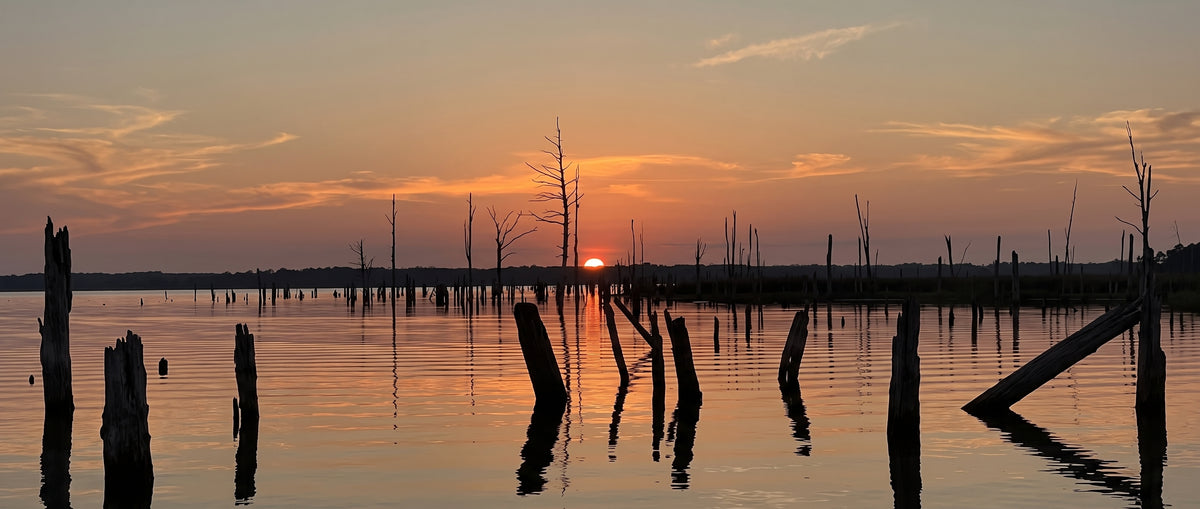
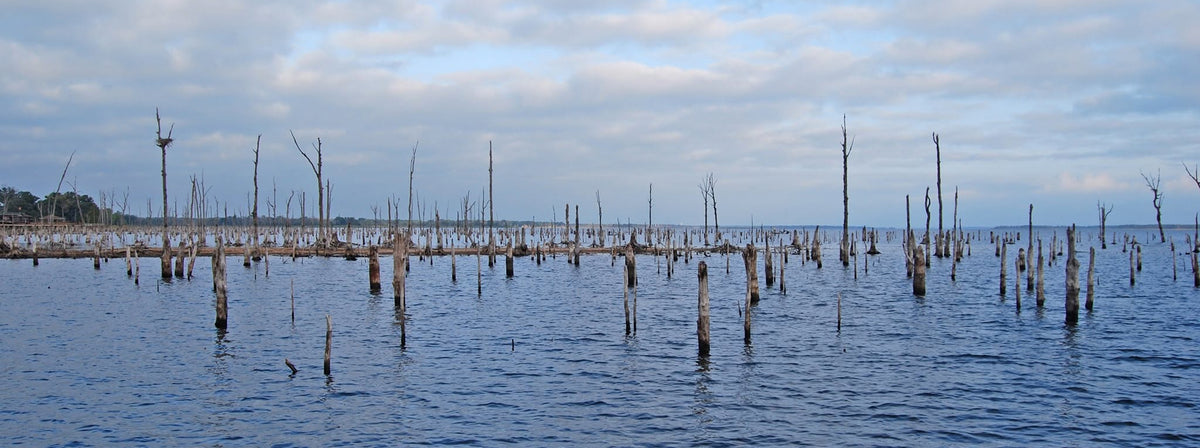
This is the lake that turned Northeast Texas into a bass-fishing destination. For forty years, anglers from all over the country have pointed their trucks this way — many of them rolling right through Paris on the way — chasing the fish of a lifetime. The 27,000 acres of stained water, flooded timber and hydrilla you're headed to is the same water that rewrote the record book. Fork doesn't promise everybody a giant. It promises something better: the honest, electric possibility that your very next cast connects with the biggest bass of your life.
Why Fork Grows Them Big — and the Slot That Keeps It That Way
Three things made Fork a factory and keep it one. First, genetics: it was stocked with fast-growing Florida-strain largemouth from the start. Second, habitat: they left the standing timber, and the lake's endless feeder creeks — Caney, Birch, Mustang and more — pump nutrients through the whole system, feeding the food chain from the bottom up. Third, and most important, the rules. Lake Fork's famous 16-to-24-inch slot limit means every bass between 16 and 24 inches must go back — you can keep five under 16, and only one over 24 per day. That single regulation protects the prime spawning females that produce the next generation of giants, and it's why Fork keeps rewriting the record book while lakes with worse rules can't grow a ten-pounder.
For you, that means two things. One: come expecting to release the fish you drove here for — this is a photo-and-release trophy lake, and keeping a slot fish is a $500 ticket the wardens will happily write. Two: it means the giants are really out there, protected and growing, waiting on the right cast. Handle them right, get a quick weight and photo, and turn them loose to grow bigger and make more — that's the deal that keeps Fork the best big-bass lake in Texas.
The Smart Stop on the Way
Load Up at Brannan's Before You Make the Run
Here's a tip the regulars already know: gear up before you get to the lake. For a huge share of anglers headed to Fork — everybody coming from the northeast, up around Paris and the Red River country — Brannan's is right on the way, and it's worth the stop. We stack our shelves deeper and price them better than the little shops at the lake, so you can load up on the baits Fork eats without the lakeside markup or the "sorry, we're out" on tournament weekend. Jigs, big worms, swimbaits, lipless and squarebill cranks, jerkbaits, flutter spoons, forward-facing-sonar baits, heavy line, terminal tackle — we keep it stocked deep because we know what this lake demands.
We also know Fork. Stop in, tell us when you're going and what the water's doing, and we'll help you build a game plan and a bait selection that fits the season instead of guessing at the counter down the road. Grab your Texas license while you're here, top off on anything you forgot, and roll into the ramp ready. The pros gear up before they launch — do the same, and spend your time on the water fishing instead of shopping.
Lake Fork Bite Forecast
Live · updated —
Wind Directions Grandpa's Advice
-

Northern Wind- The fish come forth
The cold front just pushed through, Bass may still bite, but they can become less aggressive. Start around timber, protected points, creek-channel edges and cover with a jig, Texas rig, suspending jerkbait or slower-moving soft plastic.
-

Eastern Wind- The fish bite the least
Don't panic, adjust. Instead of abandoning the lake, fish the side where the wind is contacting a point, riprap or shoreline, then slow down if moving baits do not produce and consider throwing out your favorite Urchin from Brannan's.
-

Southern Wind- Fish bite the mouth
Warm southerly winds are common before fronts in Northeast Texas. Try spinnerbaits, bladed jigs, crankbaits, lipless crankbaits and swimbaits along wind-blown points and banks. A breeze can increase surface disturbance and position feeding activity near shoreline cover.
-

Western Wind- The fish bite the best
Fish On! Often times a storm system is on the way and the pressure is dropping.
Your excuse to start aggressive. Look for points, riprap, timber edges and banks getting hit directly by the wind. Bassmaster notes that banks receiving wind more directly can be particularly productive. -

When the Wind is Still- The fish are ill
Flat water often makes fish easier to spook and removes the surface disturbance that can help moving-bait fishing. Try worms, drop shots, Ned rigs, finesse jigs or subtle topwaters early, and target shade, timber, vegetation and deeper structure. Urchins are good back ups here.


What's Biting, Season by Season
-

Summer — Deep by Day, Giants After Dark
Summer is the only season Fork makes you work, and the answer is to fish when the fish feed: dawn, dusk, and — the move few travelers make — at night. After dark in July and August, big Fork bass move up shallow to feed and lose their daytime caution; a black Colorado-blade spinnerbait or a big dark worm worked slow over the grass and timber under a full moon is a legitimate double-digit pattern, and you'll have the lake to yourself and cooler air to boot. By day, it's a deep game: main-lake points, humps, timber lines and submerged roadbeds in 15–28 feet with Carolina rigs, deep cranks, big worms, football jigs and flutter spoons, plus a drop-shot or Ned rig for the pressured ones. This is peak forward-facing-sonar season — the bass suspend out over open water following shad, and seeing one and dropping on it is how the deep summer fish get caught. Fish shade, deep grass, and the graph.
-

Fall — Chase the Shad, but Fish the Wood
Yes, fall is a shad chase — but on Fork specifically it's a WOOD chase now, and that's the local truth that separates guides from tourists. Fork's deep hydrilla has thinned over the years, so come September and October the fall fish relate to standing timber and stumps, not the grass everybody remembers. Look for distinct, isolated trees on main-lake points in 8–15 feet and channel swings where a 4–6-foot flat drops fast into deeper water — the fish suspend and roam around that wood chasing shad. A shad-pattern deep-diving crankbait and a 10-inch Texas-rigged worm are the guide standbys; add lipless cranks, squarebills and topwater over the flats and creek mouths. It's not the classic season for a lake-record giant, but there are stacks of fat, healthy fish and far fewer boats. Watch for thick morning fog on the big water and run at idle until it burns off.
-

Winter & Pre-Spawn — The Giant Window & the Red Trap
This is the trip trophy hunters build their whole year around, and Fork does it differently than anywhere. From January into March the biggest females stage on the outside channel bends — where a creek swing brings 20-plus feet of water within a long cast of a shallow flat. Caney, Birch, Glade and the Lake Fork Creek arm are the classic "subway stops," and the fish sit on those ledges like commuters waiting on a train. Two patterns win here. First, the suspending jerkbait: cast it out, twitch it, and let it hang dead-still for ten to fifteen seconds — a Fork giant will stare a motionless bait down and then crush it, so patience isn't a virtue, it's the whole technique. Second — and this is the one Fork is legendary for — when the water slides to 50–52° and the crawfish turn red coming out of winter, rip a red lipless crankbait (the "Red Trap") through the remaining hydrilla in 3–8 feet and bang it off the stumps. That reaction bite is a detonation, not a tap. Slow-rolled big swimbaits over brush at 10–18 feet round it out. Release everything 16–24 inches — these are the exact fish that make Fork, Fork.


The Fish & How to Catch Them
Largemouth Bass — the whole reason Fork exists
Largemouth Bass — the whole reason Fork exists
This is the best trophy-largemouth lake in Texas, full stop — the state record, thirty-plus of the Texas Top 50, and the ShareLunker crown all live here. Florida-strain genetics, protected by the 16-to-24-inch slot, growing in the richest watershed in the state. Your best shot at a giant is the January–March pre-spawn, when the big females stage in the creek channels; the spring spawn (58–65°) brings numbers and quality shallow; summer is deep and early on the points, humps and timber; fall is a shad chase in the creeks. Match the season: jigs, big worms, swimbaits, jerkbaits, lipless and squarebill cranks, Carolina rigs, flutter spoons, and topwater over the grass. Forward-facing sonar is a real weapon here. Remember the rules — everything 16 to 24 inches goes back, one over 24 per day, and keeping a slot fish is a $500 ticket. Come to release a giant, not to fill a cooler, and Fork will keep making legends.
Crappie —the underrated Fork slab bite
Crappie —the underrated Fork slab bite
Fork isn't just a bass lake — it's one of the better crappie lakes in Texas, and a lot of folks come home with a cooler of slabs. They stack on the standing timber, brush and the bridge pilings (the Highway 154 area is famous for it), shallow on cover in spring and out deep on the timber and channel edges in summer and winter. Jigs and live minnows on light line, and forward-facing sonar to pick them off the trees. Note the special crappie rule: from December 1 through the end of February there's no minimum length and no culling, with a 25-per-day limit — check current TPWD regs. If the bass are being stubborn, the crappie will usually save the trip.
Catfish — big blues and easy channels
Catfish — big blues and easy channels
Fork was stocked with blue, channel and flathead catfish and grows them well in that rich water. Channel cats are everywhere and easy — cut bait, prepared bait and nightcrawlers on the flats, channel edges and timber. The blues get big; drift cut shad over main-lake structure and creek channels, and flatheads want live bait around the timber and deep cover. Great year-round action, perfect for the bank or the kids, and a nice change of pace when you want a bend in the rod between bass. A circle hook does the work.
Bluegill & Redear — kid-approved
Bluegill & Redear — kid-approved
Fork was stocked with coppernose bluegill and redear sunfish, and they're thick around the shallow cover, docks and vegetation. Crickets, worms and tiny jigs under a cork will keep a kid busy all day, and they're the best possible way to get a young angler hooked on Fork early. They also make outstanding live bait and a fine fish fry. Don't overlook them on a family trip.
Where to Launch
The Sabine River Authority runs public boat ramps and recreation areas around Lake Fork, plus numerous private marinas with fuel, slips and tackle. Two of them do double duty: Swearingen is a full family park with a pier and splash pad, and Caney Point is a six-lane tournament ramp that's hosted the Bassmaster Elite Series. Pick your launch by whether you're bringing the family, fishing a derby, or hunting a specific arm. One tip from experience: on tournament weekends the ramps back up, so arrive before 6 a.m. — and gear up before you get here, because you don't want to be shopping at dawn. Tap any card for directions.
← Swipe or tap the arrows →
W.C. Swearingen Rec Area
Best for familiesBoat ramp · 200-ft accessible fishing pier · Splash pad · Playground · Pavilions · BBQ grills · Picnic tables · 1-mile walking path · Basketball court · Restrooms · FREE
This is the family headquarters of Lake Fork, and it's a beauty after the SRA's big renovation. Sitting at the north (head) end of the Highway 154 bridge on the west bank, Swearingen has everything a family day needs: a wheelchair-accessible 200-foot fishing pier where kids can catch bream, crappie and bass right off the rail, a splash pad and playground to burn off energy, shaded pavilions and grills for a cookout, a one-mile walking path, even a basketball court — plus a boat ramp and bank access, all with no usage fee. Dad or mom can slip out and fish while the kids play, or everybody can fish the pier together. If you're bringing the family to Fork, launch and base here. From Quitman, take SH 154 north and it's on the right just after the bridge.
Get directions →Caney Point Rec Area
Tournament HQ / 6-lane rampSix-lane concrete ramp · 8,000 sq-ft events center · Large paved parking · Pavilion · Restrooms · Caney Creek arm
If you're fishing a tournament, this is your launch. Caney Point is the SRA's newest facility, purpose-built to host big events — a six-lane concrete ramp, an 8,000-square-foot events center and acres of paved parking, on the Caney Creek arm at the southeast side of the 154 area. It hosted a Bassmaster Elite Series stop, which tells you everything about the ramp capacity and the water it opens up. Even outside derby days it's a fast, uncrowded launch onto some of Fork's best pre-spawn bass water. Six lanes means you're on the water fast even on a busy morning — get here early on event weekends anyway.
Get directions →FM 2946 Ramp
North / Lake Fork Creek armPublic ramp · Adjacent marina · Lake Fork Creek arm · North end
On the north end at the FM 2946 (CR 2946) bridge on the main Lake Fork Creek arm, with a marina right there for fuel and supplies. The mid-lake water around this bridge consistently produces quality bass, especially during the spawn. A good pick for the northern and central lake and the main-river structure.
Get directions →FM 17 Ramp (West)
West side accessPublic ramp · West-side access · Parking
A west-side public ramp that gets you onto that side of the lake and its creek arms and timber without fighting the busiest launches. Handy when the wind or the crowds send you looking for water on the west end. Confirm current condition and parking before a weekend run.
Get directions →Private Marinas
Fuel · slips · guidesMultiple marinas · Fuel · Boat slips · RV/cabins · Guide services
Fork has a bunch of private marinas ringing the lake — Lake Fork Marina, Minnow Bucket and others — that offer fuel on the water, slips, launch access (for a fee), lodging and guide services, plus better storm protection and closer access to some prime water. Great if you're staying a few days or want fuel mid-lake. There are no public campgrounds, so the marinas and private lodges are your on-lake lodging.
See marinas →Before You Go
Read this firstArrive before 6 a.m. weekends · Gear up at Brannan's first · Mind the fog & timber
A few things that make a Fork trip smoother. Ramps back up early on weekends and tournament days, so launch before six if you can. Fork's stained water hides timber and stumps and its 315 miles of shoreline swallow fog fast in fall and winter — run at idle in the timber and know where you are. And do your shopping before you get here: Brannan's is your deep-inventory, fair-price stop on the way, so you roll in loaded instead of hunting for baits at a picked-over lakeside counter. Check current lake level, ramp status and regulations before you launch.
Load up at Brannan's →Local Tips & Hidden Gems
Plan your trophy trip for the pre-spawn, not the calendar
Plan your trophy trip for the pre-spawn, not the calendar
The single best window for a giant is January through March, when the biggest females stage in the creek channels before the spawn. But it's a water-temp event, not a date — 50–58° gets the big ones feeding, and it can swing a couple weeks either way year to year. Watch the temp and aim for a warm, stable stretch after a cold snap. If a double-digit fish is the goal, this is the trip to plan your year around.
Learn the "Red Trap" — Fork's signature cold-water pattern
Learn the "Red Trap" — Fork's signature cold-water pattern
When the water drops to 50–52° and the crawfish turn red coming out of dormancy, Fork bass key on that color like a switch flips. Rip a red lipless crankbait — anglers here call it the Red Trap — through the remaining hydrilla in 3–8 feet, and bang it off stumps and let it flutter down to mimic a fleeing craw. The strike is violent. It's the most famous winter pattern on the lake for a reason, and it puts big pre-spawn fish in the boat when a slow bait won't get bit.
Fish the channel-swing "subway stops"
Fish the channel-swing "subway stops"
Fork's giants don't wander — they commute. Find the outside bends where a creek channel swings so deep water (20+ ft) sits within a long cast of a shallow flat, and you've found a highway the big ones travel between deep winter water and the spawning pockets. Use your 2D sonar to find the channel drop, then forward-facing sonar to spot the suspended fish stacked on the ledge. These bends produce year after year — mark them once and they're yours for life.
The jerkbait deadstick — count to fifteen
The jerkbait deadstick — count to fifteen
This wins more Fork tournaments than anglers admit. In cold water, cast a suspending jerkbait, twitch it down, and then do nothing — let it hang dead-still for ten, fifteen, even twenty seconds. A big Fork bass will follow and stare at a motionless bait for what feels like forever before she eats. If you're reeling, you're losing. The hardest part is trusting the pause; the anglers who can stand there and wait are the ones who weigh in.
Get tournament-ready: pre-rig, pre-tie, and carry backups
Get tournament-ready: pre-rig, pre-tie, and carry backups
Fork rewards preparation like few lakes. Before a derby, spool fresh line, tie your primary baits on multiple rods so you're not re-rigging in the strike zone, and carry backups of anything that's working — you will lose baits in the timber, guaranteed. Have a milk run of 8–12 spots marked and an order to fish them by wind and sun. And bring a reliable scale and a livewell dialed for fish care, because on Fork you're often deciding whether one bite is a keeper, a slot fish to release, or the one over 24 you're allowed. The anglers who cash checks here did their homework before they backed down the ramp.
Know the slot cold — a keeper mistake is a $500 ticket
Know the slot cold — a keeper mistake is a $500 ticket
Every bass from 16 to 24 inches must go back, you can keep five under 16, and only one over 24 per day. Fork wardens patrol hard on weekends and during tournaments, and a slot fish in your livewell is a Class C fine around $500. Carry a reliable measuring board, and when in doubt, throw it back — you came here to release giants anyway. Get a quick weight and photo and let her swim.
Polarized glasses aren't optional here
Polarized glasses aren't optional here
Two reasons, both Fork-specific. One: the standing timber and stumps sit just under stained water, and good polarized lenses let you see them before your lower unit does. Two: during the spawn, spotting a bedded giant before she spots you is the difference between a photo and a wave goodbye. Cheap sunglasses cost you fish and props on this lake — wear real glass.
Respect the timber and the fog
Respect the timber and the fog
Fork's stained water hides standing timber and stumps, and its 315 miles of shoreline swallow morning fog fast in fall and winter. Idle in the timber, know where you are, and if the fog drops thick, slow to idle and use your GPS — don't guess your way through the woods. Text someone your launch ramp and the arm you're fishing before you lose signal.
Don't sleep on the crappie — or the "barfish"
Don't sleep on the crappie — or the "barfish"
When the bass get stubborn, Fork's crappie save the trip — fish the timber, brush and the Highway 154 bridge with jigs and minnows on light line (special reg Dec 1–end of Feb: no minimum, no culling, 25/day; verify TPWD). And here's a bonus locals know: schools of yellow bass — "barfish" — pile up in winter and will bend a rod all day on small jigs and spoons. Nobody writes about them, and they're a blast for the kids.
Gear up at Brannan's — deeper inventory, fair prices, on the way
Gear up at Brannan's — deeper inventory, fair prices, on the way
The regulars stock up before they get to the lake, and it's not just about the lakeside markup. It's about not getting to a picked-over shop on tournament weekend and finding they're out of the one bait that's working. We keep it deep, we price it fair, and for a lot of Fork-bound anglers we're right on the way. Load up here — jigs, worms, swimbaits, cranks, red lipless baits, line, terminal tackle and your license — and roll in ready.


Your Last Stop Before Bois d'Arc
Load Up Before You Launch
Headed to Lake Fork? Make Brannan's your stop. We stock the baits Fork eats deeper — and price them better — than the lakeside shops, so you roll in loaded instead of shopping at dawn. Grab your jigs, worms, swimbaits, cranks, line, terminal tackle and Texas license, get a fresh report, and go chase a giant. Order online and pick up on the way.
Brannan's Bass Shop · 10081 US-271, Powderly, TX 75473 ·
Open 7 days 6am-6pm
Lake Fork — FAQ
Why is Lake Fork famous?
Why is Lake Fork famous?
Lake Fork is the best trophy-largemouth lake in Texas. It produced the 18.18-pound state record (Barry St. Clair, 1992) and more than 30 of the Texas Top 50 biggest bass ever, and it's the leading producer for the Toyota ShareLunker program. Florida-strain genetics, protective slot limits and rich habitat make it the state's big-bass capital.
What is the slot limit on Lake Fork?
What is the slot limit on Lake Fork?
Largemouth bass between 16 and 24 inches must be released. You may keep five bass under 16 inches, and only one bass over 24 inches per day. Keeping a slot fish is a Class C misdemeanor (about a $500 fine), and wardens patrol heavily — always check current TPWD regulations.
When is the best time to catch a big bass at Lake Fork?
When is the best time to catch a big bass at Lake Fork?
January through March, the pre-spawn, is the top window for a double-digit trophy, when the biggest females stage in the creek channels and feed hard. The spring spawn (58–65°) brings numbers and quality shallow. Summer is deep and early; fall is a shad chase in the creeks.
What is the Texas state record bass, and where was it caught?
What is the Texas state record bass, and where was it caught?
The Texas state record largemouth is 18.18 pounds, caught by Barry St. Clair at Lake Fork on January 24, 1992. It measured 25.5 inches long with a 22.5-inch girth and has stood for over three decades.
Where can I buy bait and tackle before fishing Lake Fork?
Where can I buy bait and tackle before fishing Lake Fork?
Brannan's Bass Shop in Powderly, Texas is a smart stop on the way for anglers coming through Northeast Texas — deeper inventory and better prices than the lakeside shops, plus a fresh report and your Texas license. Load up before you launch so you're not shopping at a picked-over counter on tournament weekend.
Do I need a license to fish Lake Fork?
Do I need a license to fish Lake Fork?
Yes — a Texas fishing license is required for anglers 17 and older. You can buy and print one in store at Brannan's Bass Shop on your way to the lake.
Is Lake Fork good for crappie and catfish too?
Is Lake Fork good for crappie and catfish too?
Yes. Fork is one of the better crappie lakes in Texas (great around the timber and the Highway 154 bridge, with a special December–February reg), and it holds blue, channel and flathead catfish plus bluegill and redear sunfish. It's a bass lake first, but it fishes well for the whole family.
How far is Lake Fork from Paris, Texas?
How far is Lake Fork from Paris, Texas?
About two hours from Brannan's Bass Shop in Powderly — Fork sits roughly 90 miles east of Dallas near Quitman, and Brannan's is a convenient gear-up stop for anglers routing through Northeast Texas.
What lures work best at Lake Fork?
What lures work best at Lake Fork?
It depends on the season, but the Fork staples are: suspending jerkbaits and red lipless crankbaits (the "Red Trap") in cold water; soft plastics, wacky rigs and bladed jigs in the spawn; Carolina rigs, big worms, football jigs and flutter spoons deep in summer; and lipless cranks, squarebills and swimbaits in the fall. Big slow-rolled swimbaits over brush are a year-round trophy bait. Forward-facing sonar has made jerkbaits and soft-plastic jerkbaits deadly on suspended fish.
Can you catch a big bass from the bank at Lake Fork?
Can you catch a big bass from the bank at Lake Fork?
Yes. While Fork is mostly a boat lake because of the timber, there's a 200-foot accessible fishing pier at the W.C. Swearingen Recreation Area (head of the Hwy 154 bridge) and another at the SRA day-use area near the dam, plus bank access at the public ramps and bridges. Double-digit bass have been caught from the bank here — long-cast a Carolina rig or Texas-rigged worm to the timber and grass lines, and fish early and late.
Is Lake Fork good for families and kids?
Is Lake Fork good for families and kids?
Very. The W.C. Swearingen Recreation Area at the Hwy 154 bridge is a full family park — a fishing pier, splash pad, playground, pavilions and walking path, all free — so the family can play while you fish, or everybody fishes the pier together. Kids catch bluegill and redear on crickets in the shallows, and can get in on the bass action too with easy cast-and-reel baits like spinnerbaits and lipless cranks. Fall schooling bass are especially fun. Marinas and lodges offer family lodging.
What eats — is Lake Fork catch and release only?
What eats — is Lake Fork catch and release only?
No, but it's managed as a trophy fishery. You may keep five bass under 16 inches and one over 24 inches per day; everything from 16 to 24 inches must be released. Most anglers photo-and-release their big fish. Crappie, catfish and sunfish have their own limits and are commonly kept for the table.
Do I need forward-facing sonar to catch fish at Lake Fork?
Do I need forward-facing sonar to catch fish at Lake Fork?
No — plenty of Fork fish are caught shallow, from the bank, and on classic patterns. But modern Fork is heavily fished with live sonar (LiveScope, Active Target) for suspended and deep fish, and for a serious trophy trip it's a real advantage. Beginners and families do just fine without it.