Worth Crossing the Red River
Why We Send Crappie Hunters North to Hugo
We love our home lakes — but when a customer walks in and says "I want to fill a livewell with slab crappie," we point the truck north. Hugo Lake sits on the Kiamichi River just up the road in southeast Oklahoma — about 30 minutes to the ramp and only 20 to the spillway — and it's one of the most consistent crappie factories in this whole corner of the country. Thirteen thousand acres of flooded timber, brush and rock, a spring spawn that turns the shallows into a slab convention, and — the part folks forget — a dam tailrace and river system that keep fish biting when the lake gets tough.
Here's the honest pitch for driving past your home water: Hugo gives you a different kind of trip. It fishes big and wild, the timber and river make it feel like a place you have to earn, and on a good spring day the crappie fishing flat outshines anything close to home. It's also a genuine year-round option — catfish gang up below the dam all summer, and the tailrace and Kiamichi produce when the main lake slows. One catch you need to know before you load up: Hugo's in Oklahoma, so you'll need an Oklahoma fishing license (more on that below — it's easy). Everything else you need — rods, jigs, minnow rigs, line and a fresh game plan — grab it here on your way out. Once you cross that river, we're the last shop you know.
Hugo Lake Bite Forecast
Live · updated —
Wind Directions Grandpa's Advice
-

Northern Wind- The fish come forth
The cold front just pushed through, Bass may still bite, but they can become less aggressive. Start around timber, protected points, creek-channel edges and cover with a jig, Texas rig, suspending jerkbait or slower-moving soft plastic.
-

Eastern Wind- The fish bite the least
Don't panic, adjust. Instead of abandoning the lake, fish the side where the wind is contacting a point, riprap or shoreline, then slow down if moving baits do not produce and consider throwing out your favorite Urchin from Brannan's.
-

Southern Wind- Fish bite the mouth
Warm southerly winds are common before fronts in Northeast Texas. Try spinnerbaits, bladed jigs, crankbaits, lipless crankbaits and swimbaits along wind-blown points and banks. A breeze can increase surface disturbance and position feeding activity near shoreline cover.
-

Western Wind- The fish bite the best
Fish On! Often times a storm system is on the way and the pressure is dropping.
Your excuse to start aggressive. Look for points, riprap, timber edges and banks getting hit directly by the wind. Bassmaster notes that banks receiving wind more directly can be particularly productive. -

When the Wind is Still- The fish are ill
Flat water often makes fish easier to spook and removes the surface disturbance that can help moving-bait fishing. Try worms, drop shots, Ned rigs, finesse jigs or subtle topwaters early, and target shade, timber, vegetation and deeper structure. Urchins are good back ups here.


What's Biting, Season by Season
-

Summer — Catfish & the Tailrace
Summer is catfish season at Hugo, and the fish gang up below the dam — channel, blue and flathead cats stack in the tailrace and spillway on cut bait, live bait and shad. It's some of the best catfishing around when the lake heats up. Crappie pull out to the deeper brush and channel edges (10–20 ft) — best early and late. Bass go early-and-deep. When the main lake bakes, the moving water below the dam is where the action is.
-

Fall — Bass Frenzy & Fat Crappie
As it cools, the shad move and everything follows. Fall bass gang up and chase them — crankbaits, spinnerbaits, lipless baits and topwater over points, flats and timber edges. White bass school on the main lake; watch for surface activity and birds. Crappie feed hard on the brush again, fattening up for winter, and they're some of the healthiest fish of the year. Fast, fun, cover-water fishing with fewer crowds.
-

Winter — Deep Brush & Dam Cats
Winter is quiet, deep and steady — and it's when Hugo's catfish really shine, especially below the dam where they stack up thick on cut bait and shad. Crappie group up deep on the brush, timber and channel edges (jigs and minnows, slow and vertical), and a warm stretch will pull them shallower for a bonus bite. You'll have the lake nearly to yourself. Bundle up, fish slow, and don't overlook the tailrace.
-

Spring — The Crappie Run
The main event. As the water hits the low-to-mid 60s, crappie flood the shallow brush, standing timber and creek backs to spawn — jigs and minnows, limits of slabs, and the biggest fish of the year. The sand bass (white bass) run up the Kiamichi and the creek arms about the same time, which is a blast on light tackle. Largemouth move shallow to spawn too. If you only fish Hugo once, this is the trip


The Fish & How to Catch Them
Crappie — the reason you drive north
Crappie — the reason you drive north
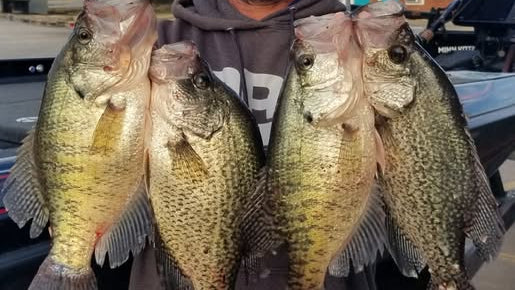
Hugo is a slab factory, and it's why this page exists. It's got both black and white crappie; they school separately but use the same cover, so when you find a brush pile giving up fish, you may catch both — sit down and work it. The pattern follows the water temp: shallow brush, standing timber and creek backs in spring (62–66° is the magic window), then out to deeper brush, channel edges and points at 10–20 feet as it warms, and deep and grouped in winter. Light line and small hooks are non-negotiable — crappie inhale a small bait and spit it fast. Jigs in a range of colors and live minnows both produce; a lot of Hugo regulars swear by hair jigs (handties) in cold or clear water because that subtle, breathing look gets bit when nothing else will. This is a numbers lake — find the school, pick your bait, and fill the box.
Catfish — the dam is the spot
Catfish — the dam is the spot
Hugo's catfish are a genuine draw, especially in summer, and the single best place is below the dam. Channel, blue and flathead cats stack up in the tailrace and spillway where the current concentrates food and oxygen — cut bait, live bait, shad, punch bait and stinkbait all get bit. On the main lake, work the river channel, creek channels, standing timber and baited holes. They bite year-round here, and winter below the dam can be outstanding. This is the easiest, most reliable bend-in-the-rod on the whole lake, and perfect for the bank or the kids — a circle hook does the work.
Bass — cover, points & the fall frenzy
Bass — cover, points & the fall frenzy
Hugo bass aren't the headliner, but they're solid and fun, and the fall shad chase is a legitimate reason to go. Fish brush structure, standing timber, points, riprap and creek channels — plastics, spinnerbaits, crankbaits, lipless baits and topwater depending on season. Spring pushes them shallow to spawn in the coves; summer is early-and-deep; fall is a shad-chasing frenzy where they gang up and feed hard. There are spotted bass in the mix too, especially on rock and points. Match the shad in fall and hang on.
White Bass — the spring run & open-water fun
White Bass — the spring run & open-water fun
The sand bass run is a Hugo highlight. In spring they push up the Kiamichi River and the creek arms to spawn with the warm-up and the current — get in the flow with in-line spinners, small jigs and spoons and you'll wear your arm out. The rest of the year they school on the open main lake, on points and below the dam, chasing shad — slabs, spoons and swimbaits into the surface activity. When the birds start diving, idle over and enjoy the fastest action on the lake. Great fun for the whole crew and a fine way to fill a fryer.
Where to Launch
Hugo has good access all the way around — Corps of Engineers parks with ramps, camping and picnic areas, plus a marina. Where you launch depends on whether you're after the spring crappie shallows, the open main lake, or the dam tailrace. One thing first, though: you're in Oklahoma now, and there's no tackle shop up here you know — so gas up, grab your Oklahoma license and your tackle from us before you cross. Tap any card for directions.
← Swipe or tap the arrows →
Kiamichi Park
Best all-around / amenitiesBoat ramps · Camping · RV hookups · Restrooms · Picnic pavilions · Playground
The main Corps park and the easiest home base for a Hugo trip. Concrete ramps, plenty of camping and RV sites, reservable picnic pavilions and a playground make it the family-and-weekend pick. It puts you on the lower/main lake with quick access to open water and the timber. If it's your first Hugo trip or you're bringing the crew, start here. It's on the south side of the lake — follow US 70 east of Hugo and the signs.
Get directions →Virginia Point / Rattan Landing
Upper lake & timberBoat ramp · Upper-lake access · Timber & river arm nearby
Launch on the upper end and you're close to the flooded timber, the creek arms and the Kiamichi River arm — the shallow, stained water that warms first and loads up with spring crappie and the sand bass run. This is the end to fish when they're shallow and spawning, and it's quieter than the main-lake ramps. Idle slow in the timber and watch for stumps.
Get directions →Below the Dam
Tailrace & bank fishingBank access · Tailrace/spillway · Catfish & white bass · No boat needed
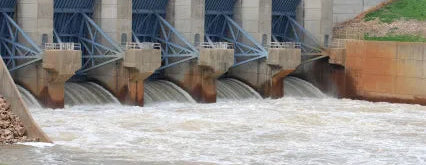
You don't even need a boat to have a great day at Hugo. The tailrace below the dam is bank-fishing heaven when they're releasing water — catfish and white bass stack in the current. The spillway is visible right off US 70 west of Sawyer. Fish the current seams and the eddies, bring enough weight to hold bottom, and mind the water level, because it comes up fast when they generate. Obey all posted signage around the dam.
Get directions →Before You Cross the River
Read this firstOklahoma license required · No shop you know up there · Gas up & stock up first
Hugo's in Oklahoma, so a Texas license won't cut it — you need an Oklahoma fishing license (anglers 18 and up; 17 and under are exempt; Texas residents 65+ may fish under reciprocity — check current ODWC rules). Grab an electronic one before you leave, or ask us and we'll point you to it. And once you cross the Red River, we're the nearest shop you trust — so top off the truck, load up on jigs, minnows-rigs, line, cut bait and anything you forgot right here at Brannan's on the way out. A little planning turns a long drive into a slam-dunk trip.
Oklahoma license info →Local Tips & Hidden Gems
Time your trip to the spring water temp, not the calendar
Time your trip to the spring water temp, not the calendar
The Hugo crappie run is a water-temp event, not a date. When the lake hits the low-to-mid 60s and holds there a few warm days, the males pull up shallow and it's on — 62–66° is the magic window. Watch the water temp before you commit to the drive; a warm, stable stretch after a cold snap is the day to be there, and it can swing a week or two either side of "normal" year to year. Don't drive north on the calendar — drive north on the thermometer.
Two boxes of jigs: hair and plastic
Two boxes of jigs: hair and plastic
Hugo regulars carry both handties (hair jigs) and soft plastics, and it matters. Hair breathes and barely moves — deadly in cold or clear water and on pressured, finicky slabs. Plastics thump and flash for warm, active days. Bright colors on stained or cloudy water, natural on clear. If one's not producing, switch before you leave the fish — that's usually the whole adjustment on this lake.
When the lake's tough, go to the moving water
When the lake's tough, go to the moving water
This is the Hugo trick nobody tells you: the day the main lake goes flat, the dam tailrace and the Kiamichi keep producing, because current means oxygen and feeding fish. Summer heat, a muddy post-front, dead calm — that's your cue to fish below the dam or up in the river arm instead of grinding the lake. Having that fallback is exactly why Hugo is a year-round trip and not just a spring lake.
Light line and small hooks or go home
Light line and small hooks or go home
Crappie inhale a small bait and spit it in a heartbeat, and Hugo fish see pressure. Downsize: light line, small hooks, small baits. It's the difference between a slow pick and a full livewell, and it's the single most common thing that separates the folks filling boxes from the folks watching them. Save the heavy stuff for the catfish.
Know the river's rulebook is not the lake's
Know the river's rulebook is not the lake's
Oklahoma regulates the Kiamichi below Hugo Dam a little differently than the lake — cast-net and bait rules especially, and shad you catch in the river generally have to stay in the river. Check the current ODWC regs for the exact reach you're fishing before you go, or ask us. A two-minute check beats a game-warden surprise, and Oklahoma wardens are strict about bait rules.
Get your Oklahoma license before you leave the driveway
Get your Oklahoma license before you leave the driveway
You need an Oklahoma license to fish Hugo, and the last thing you want is to realize it at the ramp with no signal. Buy an electronic one before you go (anglers 18+; 17 and under exempt; TX residents 65+ may fish under reciprocity — verify current rules). Stop in and we'll make sure you've got your license situation sorted and everything else you need, so the only thing left to do up there is fish.
Load up at Brannan's — there's nothing you know across the river
Load up at Brannan's — there's nothing you know across the river
Southeast Oklahoma is beautiful and empty, which is great for fishing and rough for forgetting something. It's a short, easy drive — about 30 minutes to a ramp — but once you cross the Red River there's no shop you trust. So make Brannan's your last stop: jigs, minnow rigs, line, cut bait, hooks, and a fresh report on what's biting. Order online and pick up on the way if you want to be in and out. Five minutes here saves a wasted trip back down.
Shop by Technique or Target Fish


Your Last Stop Before the Red River
Load Up Here — There's Nothing You Know Up There
Heading north to Hugo? Brannan's is your last real tackle stop before you cross into Oklahoma. Grab your jigs and minnow rigs, cut bait, line, hooks, and a fresh report on what's biting — and we'll make sure your Oklahoma license situation is sorted before you roll. Order online and pick up on the way if you want to be quick
Open 7 days a week 6am-6pm
10081 US-271, Powderly, TX 75473
Hugo Lake — FAQ
Do I need an Oklahoma license to fish Hugo Lake?
Do I need an Oklahoma license to fish Hugo Lake?
Yes. Hugo is in Oklahoma, so a Texas license does not cover it — you need an Oklahoma fishing license. Anglers 18 and older need one; 17 and under are exempt. Texas residents 65 and older may fish Oklahoma under a reciprocity agreement. Always verify current ODWC rules, and buy an electronic license before you go.
What is Hugo Lake known for?
What is Hugo Lake known for?
Crappie — Hugo is one of the best crappie lakes in southeast Oklahoma, famous for its spring slab run. It also has excellent catfishing (especially below the dam), white bass, and largemouth and spotted bass.
When is the best time to fish Hugo Lake?
When is the best time to fish Hugo Lake?
Spring (roughly March–May, when the water hits the low-to-mid 60s) is the legendary crappie spawn and the top trip. Summer is prime catfish, especially in the dam tailrace. Fall brings a bass and shad frenzy, and winter is a steady deep-brush and dam-catfish bite.
How far is Hugo Lake from Paris, Texas?
How far is Hugo Lake from Paris, Texas?
Close — about 30 minutes north of Brannan's Bass Shop in Powderly to a boat ramp, and only about 20 minutes to the dam spillway. Cross the Red River into southeast Oklahoma; the lake is about 7 miles east of Hugo on US 70.
Can I fish below the Hugo dam?
Can I fish below the Hugo dam?
Yes — the tailrace below the dam is one of the best spots on the lake, especially for catfish and white bass when water is being released. Watch the water level (it rises fast during generation) and obey all posted signage around the dam and spillway. Note that Kiamichi River regulations below the dam can differ from the lake.
Is there a bait shop at Hugo Lake?
Is there a bait shop at Hugo Lake?
Once you cross into Oklahoma there's no shop you know, so gear up before you go. Brannan's Bass Shop in Powderly is your last full-service tackle and bait stop before the Red River — grab your jigs, minnow rigs, cut bait, line and license on the way.
Are there boat ramps and camping at Hugo Lake?
Are there boat ramps and camping at Hugo Lake?
Yes. The U.S. Army Corps of Engineers manages public parks around the lake with boat ramps, camping, RV hookups, picnic areas and a marina. Kiamichi Park is the main all-around access.